Ever considered investing in, partnering with, or joining a company — only to realize you knew almost nothing about how it actually operates behind the scenes? That gap between surface-level impressions and ground-level reality is where costly mistakes happen.
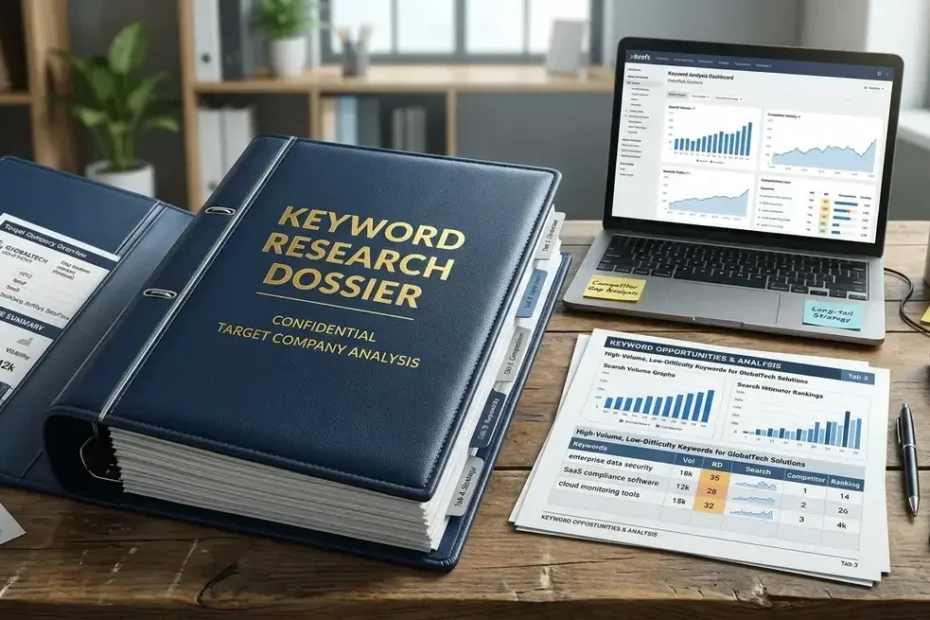
A well-built research dossier for target company bridges that gap. It gives you a clear, evidence-based picture of who you’re dealing with before you sign anything, send money, or commit your career. In this guide, you’ll learn exactly what goes into one, where to source trustworthy data, and how to put it all together without needing a Wall Street budget.
What Exactly Is a Research Dossier for a Target Company?
Think of it as a detailed background report — but for a business instead of a person. A research dossier for a target company pulls together every meaningful data point you can find about an organization: its financial health, leadership team, market position, legal history, and public reputation.
It’s not a casual Google search. It’s a structured document that organizes raw information into a narrative you can actually use to make decisions.
You might hear people call it a company intelligence report, a corporate profile, or a due diligence brief. The name changes depending on the industry, but the purpose stays the same: reduce uncertainty before you commit resources.
Who Uses These Reports?
- Investors and acquirers evaluating a potential deal
- Sales professionals preparing for enterprise pitches
- Job seekers vetting employers before accepting offers
- Competitive analysts mapping rival strategies
- Legal teams conducting pre-litigation assessments
The common thread? Everyone wants to walk into a high-stakes situation with their eyes wide open.
Why Bother Building One? (A Real-World Example)
Here’s a scenario that plays out more often than you’d think. A mid-size tech firm decides to acquire a smaller startup. The startup’s pitch deck looks incredible — growing revenue, blue-chip clients, a patented algorithm. The acquiring team is excited.
But nobody builds a proper dossier. Three months after closing the deal, they discover the startup’s biggest client just terminated its contract, the patent is being challenged in court, and two of the three co-founders are planning to leave.
A thorough due diligence research process would have surfaced all three red flags within a week. Instead, the acquirer paid a premium for problems they inherited.
That’s the real value of a structured report. It’s not about confirming what you already believe. It’s about uncovering what you don’t know — especially the things the other party hopes you won’t ask about.
The Core Components Every Dossier Should Include
A strong dossier isn’t a random collection of facts. It follows a logical structure that tells a complete story. Here are the seven sections you should aim to include:
- Company Overview — Legal name, founding date, headquarters, industry classification, and a brief description of what the business actually does (not just what its marketing says).
- Financial Snapshot — Revenue trends, profitability, funding history, debt levels, and any publicly available earnings data. For public companies, the SEC’s EDGAR database is your best starting point for accessing 10-K filings, quarterly reports, and insider trading disclosures.
- Leadership and Ownership — Key executives, board members, major shareholders, and any recent leadership changes. Pay attention to patterns: high turnover at the C-suite level is rarely a good sign.
- Market Position and Competition — Market share, primary competitors, differentiators, and customer segments. This is where a competitive analysis adds real depth to your report.
- Legal and Regulatory History — Lawsuits, regulatory fines, compliance violations, and pending litigation. A clean record is reassuring; a long list of settlements is a warning.
- Reputation and Media Coverage — News articles, press releases, employee reviews on platforms like Glassdoor, and social media sentiment. Look for consistency between what the company claims and what outsiders report.
- Risks and Red Flags — A candid summary of the biggest concerns you’ve identified. This section forces you to be honest rather than optimistic.
You don’t need all seven for every situation. A job seeker might focus on sections 3, 5, and 6, while an investor will want deep detail on 2 and 4. Tailor the depth to your purpose.
How to Gather Reliable Data (Without Spending a Fortune)
The biggest myth about corporate intelligence is that you need a Bloomberg terminal or a $10,000-a-year data subscription. You don’t. Most of the information you need is publicly available if you know where to look.
Free Sources That Punch Above Their Weight
- Government filings: Secretary of State business registries, SEC filings, and patent databases (USPTO) are goldmines of verified data.
- Census and economic data: The U.S. Census Bureau’s business statistics programs provide detailed industry-level data on employment, revenue, and geographic distribution — incredibly useful for sizing up a company’s market context.
- News archives: Google News, local newspaper databases, and industry trade publications often surface stories that corporate websites conveniently omit.
- Court records: PACER (for federal cases) and county court websites let you search for litigation history by company name.
Low-Cost Tools Worth Considering
If you’re doing this regularly, a few affordable tools can save you hours. Crunchbase offers startup funding data. Owler provides competitive intelligence snapshots. And LinkedIn Sales Navigator, while not cheap, gives you unparalleled visibility into a company’s hiring patterns and employee movements.
The key principle: always cross-reference. A single data point from a single source isn’t intelligence — it’s a rumor. When three independent sources confirm the same fact, you have something you can actually rely on.
Common Mistakes That Undermine a Good Report
Even experienced analysts fall into predictable traps. Here are the ones that cause the most damage:
Relying too heavily on the company’s own materials. Press releases, investor decks, and “About Us” pages are marketing documents, not objective reports. They tell you what the company wants you to believe, not necessarily what’s true. Use them as a starting point, not a conclusion.
Ignoring the timeline. A revenue figure from 2019 tells you very little about a company’s health in 2025. Always prioritize the most recent data available, and flag anything older than 18 months as potentially outdated.
Confusing volume with insight. A 40-page dossier full of copy-pasted data isn’t more useful than a focused 10-page report with clear analysis. The goal is clarity, not bulk. Ask yourself: “Does this paragraph help me make a better decision?” If not, cut it.
Skipping the “so what?” Data without interpretation is just noise. Don’t just report that revenue dropped 15% — explain why it matters and what it might signal about the company’s trajectory.
Research Dossier vs. Basic Background Check: What’s the Difference?
It’s easy to confuse the two, but they serve very different purposes. Here’s a quick comparison:
| Feature | Basic Background Check | Full Research Dossier |
| Depth | Surface-level facts | Multi-layered analysis |
| Sources | 1–2 public databases | 10+ verified sources |
| Time to complete | 30–60 minutes | 3–7 business days |
| Financial detail | Minimal or none | Revenue, funding, debt, trends |
| Legal history | Major lawsuits only | Full litigation and regulatory record |
| Competitive context | None | Market position and rival mapping |
| Best for | Quick screening | High-stakes decisions |
| Cost | Free to low-cost | Moderate (time-intensive) |
Think of a background check as a first date and a full dossier as a deep compatibility assessment. Both have their place, but you wouldn’t make a lifelong commitment based on a first impression alone.
Step-by-Step: Building Your First Dossier in Under a Week
Ready to put this into practice? Here’s a straightforward workflow you can follow, even if you’ve never done this before.
Day 1: Define your purpose and scope. What decision are you trying to make? What would change your mind? Write down your three biggest questions before you start researching. This keeps you focused.
Day 2–3: Collect raw data. Work through the seven core components listed above. Start with government filings and verified databases, then layer in news coverage and industry reports. Save everything in a single folder with clear file names.
Day 4: Verify and cross-reference. Go back through your data and flag anything that comes from a single unverified source. Look for contradictions between sources — those are often the most revealing findings.
Day 5: Write the narrative. Organize your findings into the seven-section structure. Lead each section with the most important insight, not the most interesting trivia. Keep your language plain and direct.
Day 6: Review and stress-test. Share the draft with a colleague or advisor. Ask them: “Based on this report, would you proceed with the deal?” If their answer surprises you, dig deeper.
Day 7: Finalize and present. Clean up formatting, add an executive summary at the top, and include a clear recommendation or risk rating at the end. A dossier without a conclusion is just a data dump.
Final Thoughts
Building a solid research dossier for a target company isn’t glamorous work. It’s methodical, sometimes tedious, and occasionally surprising in what it uncovers. But that’s exactly why it matters.
The decisions you make based on incomplete information are the ones you’re most likely to regret. A few days of focused research can save you months of headaches — and potentially hundreds of thousands of dollars. Start with the basics, stay skeptical of polished narratives, and let the data tell you the real story.
Featured Guides

Home›Blog›Blog›How to Build a Research Dossier for Target Company: A Practical Guide…

Home›Blog›Blog›How to Build a Research Dossier for Target Company: A Practical Guide…

Home›Blog›Blog›How to Build a Research Dossier for Target Company: A Practical Guide…