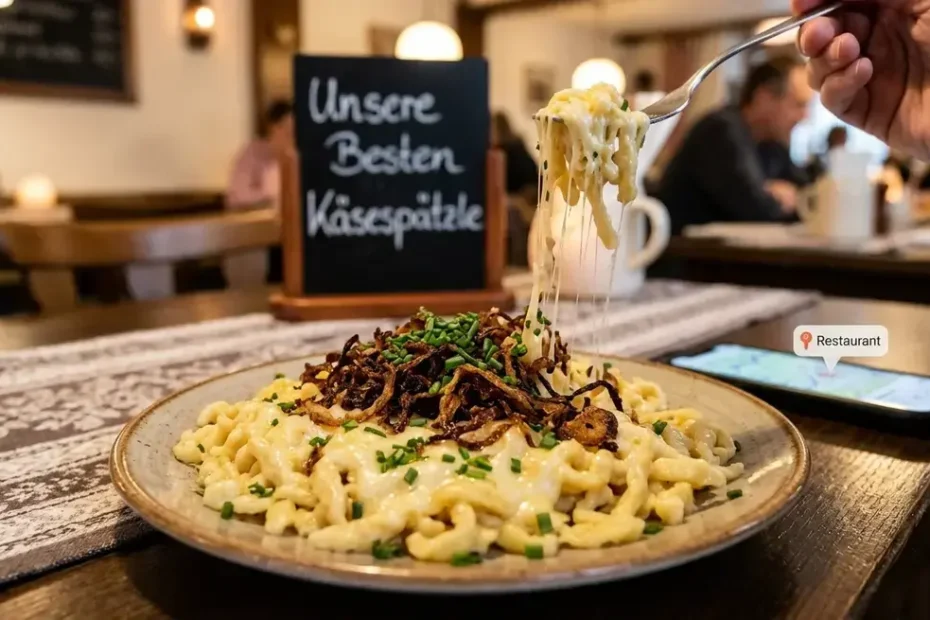
You’ve got that craving. The one where nothing sounds right except a steaming mound of soft egg noodles buried under a blanket of melted, nutty cheese and crispy fried onions. So you pull out your phone and type “best spatzle with cheese near me” — and suddenly you’re drowning in vague reviews and outdated menus.
Sound familiar? You’re not alone. Cheese spätzle (properly called Käsespätzle) is one of those dishes that’s wildly popular but surprisingly hard to find done well outside of southern Germany and Austria. This guide will help you cut through the noise, spot the real deal, and end up with a plate that actually lives up to the hype.
What Exactly Is Cheese Spätzle?
If you’ve never had it, think of Käsespätzle as the German-speaking world’s answer to mac and cheese — but richer, more textured, and far less predictable. The base is spätzle, a soft egg noodle that originated in the Swabia region of southwestern Germany. The noodles are made from a simple batter of eggs, flour, salt, and a splash of sparkling water, then scraped or pressed directly into boiling water.
Once cooked, the noodles are layered with generous handfuls of grated cheese — traditionally a mix of Emmentaler and Bergkäse (a pungent Alpine mountain cheese) — and baked or broiled until everything is molten and bubbling. A heap of dark, crispy fried onions goes on top, and that’s it. No cream sauce. No breadcrumbs. Just noodles, cheese, and onions doing their thing.
The dish has deep roots. Traditional food practices like spätzle-making have been passed down through generations in Swabian households, and the cultural significance of these regional recipes is part of why organizations like UNESCO’s Intangible Cultural Heritage program work to document and protect culinary traditions around the world. When you eat a proper plate of Käsespätzle, you’re tasting a recipe that hasn’t changed much in centuries.
What Separates Great Käsespätzle From the Rest?
Not every plate of cheesy noodles deserves your Friday night. Here’s what actually makes the difference between a forgettable bowl and one you’ll think about for weeks.
- Fresh noodles, always. The spätzle should be made in-house that day — ideally that hour. If the noodles taste gummy, uniform, or like they came from a bag, walk away. Real spätzle have an irregular, slightly chewy texture with tiny variations in size.
- The right cheese ratio. You want enough cheese to coat every single noodle, but not so much that the dish turns into a greasy fondue situation. The cheese should stretch when you pull your fork up, not pool at the bottom of the plate.
- Properly caramelized onions. Those fried onions on top shouldn’t be pale and limp. They need to be deeply golden, almost mahogany, with a sweet-savory crunch that cuts through all that richness.
- Served immediately. Käsespätzle waits for no one. The moment it leaves the oven or broiler, the clock starts ticking. A great restaurant will bring it to your table within 90 seconds of plating.
- A side of green salad. This sounds minor, but it’s a huge quality signal. Traditional Swabian Käsespätzle is always served with a simple vinegar-dressed green salad to balance the heaviness. If a restaurant skips this, they probably skipped other details too.
How to Find the Best Spatzle With Cheese Near You
Here’s where the practical stuff kicks in. Finding the best spatzle with cheese near me — or near you, rather — takes a bit more strategy than a basic map search.
Start with the right search terms. Instead of just “spätzle,” try “Käsespätzle,” “Swabian restaurant,” “German biergarten,” or “Austrian restaurant” in your maps app. Many places that serve excellent spätzle don’t optimize their listings for the English spelling, so the German term pulls up better results.
Check the menu before you go. A restaurant that lists “cheese noodles” as a side dish is probably not your target. You want Käsespätzle featured as a main course, ideally with a note about the cheese blend or noodle preparation. That level of detail signals they take the dish seriously.
Read reviews with a filter. Search the review platform of your choice for the word “spätzle” specifically. Ignore the overall star rating for a moment and focus on what people say about the noodles themselves. Words like “homemade,” “fresh,” “chewy,” and “perfectly cheesy” are green flags. Complaints about “soggy” or “bland” noodles are your cue to keep scrolling.
Ask in local food groups. This is the most underrated tactic. Post in your city’s subreddit, a local Facebook food group, or a Discord server for foodies in your area. People who care about German food love talking about it, and you’ll often get recommendations that no algorithm would surface.
Restaurant vs. Biergarten vs. Food Truck: Where Should You Look?
Not all venues serve spätzle the same way. To assist you in choosing where to spend your evening, consider this brief comparison.
| Feature | German/Austrian Restaurant | Biergarten | Food Truck / Pop-Up |
| Noodle quality | Usually excellent; made fresh daily | Good, but can vary by crowd size | Hit or miss; depends on the cook |
| Cheese selection | Often a curated blend of 2–3 cheeses | Typically one reliable cheese | Limited by space and budget |
| Portion size | Generous, plated as a main | Very large, casual serving | Moderate, sometimes small |
| Atmosphere | Warm, sit-down, sometimes upscale | Outdoor, loud, communal tables | Quick, casual, standing room |
| Price range | 14–22 | 12–18 | 10–15 |
| Best for | Date night or a proper meal | Weekend afternoons with friends | A quick fix when you’re craving |
If you want the most reliable experience, a dedicated German or Austrian restaurant is your safest bet. But don’t sleep on biergartens during the summer — there’s something about eating Käsespätzle outdoors with a cold wheat beer that just works.
Why the Cheese Choice Makes or Breaks the Dish
Let’s talk about the ingredient that gives this dish its name. The cheese in Käsespätzle isn’t a background player — it’s the entire point. And the type of cheese a restaurant uses tells you a lot about how seriously they take the recipe.
The traditional Swabian approach calls for a blend of Emmentaler (mild, nutty, great melting qualities) and Bergkäse (sharper, more complex, adds depth). Some regions in the Allgäu swap in Weisslacker, a pungent, almost funky cheese that makes the dish incredibly bold. In Austria, you’ll often see Vorarlberger Bergkäse used on its own for a richer, more intense flavor.
Why does the specific cheese matter so much? It comes down to moisture content and protein structure. Cheeses with the right balance of fat and moisture melt into a smooth, elastic layer that clings to the noodles. Too dry, and you get grainy clumps. Too moist, and the whole dish turns soupy. According to nutrition and food science researchers at the Harvard T.H. Chan School of Public Health, the aging process in cheeses like Bergkäse also concentrates flavor compounds, which is why a small amount of aged cheese can outperform a large amount of something mild.
If a restaurant lists “cheddar” or “mozzarella” as the primary cheese in their spätzle, that’s not necessarily a dealbreaker — but it does tell you they’re making an Americanized version. That can still be delicious. Just know what you’re getting.
Five Red Flags That Tell You to Skip a Spätzle Spot
I’ve eaten my share of disappointing Käsespätzle so you don’t have to. Here are the warning signs I’ve learned to spot:
The noodles look identical. Real spätzle are gloriously imperfect. If every noodle is the exact same size and shape, they were almost certainly extruded from a machine using a pre-made dough. That’s not inherently terrible, but it won’t give you the texture you’re after.
The cheese is congealed. If your plate arrives and the cheese has already formed a rubbery skin on top, it was sitting under a heat lamp too long. Fresh Käsespätzle should still be actively bubbling when it hits the table.
No fried onions visible. Some places bury the onions underneath or skip them entirely. That’s like serving a sundae without the cherry — technically still ice cream, but something essential is missing.
It’s listed under “sides.” Käsespätzle is a main course in its homeland. When a restaurant relegates it to the side-dish column, it usually means the portion is small and the preparation is an afterthought.
The menu spells it “spaetzle with American cheese.” Look, I love American cheese on a burger. On spätzle? That’s a bridge too far.
A Quick “How It Works” Breakdown of Traditional Käsespätzle
Ever wonder what actually happens in the kitchen? Here’s the traditional process from start to finish:
Step 1 — The batter. Eggs, flour, salt, and a splash of sparkling water are mixed into a thick, sticky batter. The dough is beaten vigorously until it forms bubbles — this develops the gluten just enough to give the noodles their signature chew.
Step 2 — Shaping. The batter is scraped through a slotted board (a Spätzlebrett) or pressed through a hopper directly into a pot of salted boiling water. The noodles cook in about 60–90 seconds and float to the surface when they’re done.
Step 3 — Layering. The cooked spätzle are drained and immediately layered in a baking dish with handfuls of grated cheese. This is repeated until the dish is full, usually two or three layers.
Step 4 — Melting. The dish goes under a broiler or into a very hot oven for just a few minutes — long enough to melt the cheese completely, but not long enough to dry out the noodles.
Step 5 — Topping and serving. A generous pile of crispy fried onions goes on top, and the dish is rushed to the table alongside a small green salad. Total active time from batter to plate? About 25 minutes in a well-run kitchen.
Frequently Asked Questions
What is the best spatzle with cheese near me?
The best option depends on your city, but start by searching for “Käsespätzle” at German, Austrian, or Alsatian restaurants near you. Check menus for fresh noodle preparation and traditional cheese blends like Emmentaler and Bergkäse.
Is Käsespätzle the same as mac and cheese?
Not quite. While both are cheesy noodle dishes, Käsespätzle uses soft, irregular egg noodles instead of dried pasta, and the cheese is layered and broiled rather than stirred into a sauce. The texture and flavor profile are distinctly different.
What cheese is traditionally used in Käsespätzle?
The classic Swabian blend combines Emmentaler (mild, nutty) with Bergkäse (sharp, Alpine). Some regions also use Weisslacker or Gruyère. The key is using aged, semi-hard cheeses that melt smoothly without becoming greasy.
Can I find good cheese spätzle at non-German restaurants?
Occasionally, yes. Some modern American gastropubs and farm-to-table restaurants put Käsespätzle on their menus, especially in the fall and winter. Just check reviews to confirm they’re making the noodles from scratch.
Is Käsespätzle vegetarian?
Yes, traditional Käsespätzle is vegetarian. The noodles contain eggs and flour, and the dish uses cheese and onions. However, it is not vegan due to the eggs and dairy. Always confirm with the restaurant if you have specific dietary needs.
How much should I expect to pay for a plate of Käsespätzle?
At most sit-down German or Austrian restaurants in the U.S., expect to pay between $14 and $22 for a main-course portion. Biergartens and food trucks tend to be slightly cheaper, usually in the 10–18 range.
The Bottom Line
Finding a truly great plate of cheese spätzle near you isn’t about luck — it’s about knowing what to look for. Fresh noodles, the right cheese, properly fried onions, and a kitchen that understands this dish deserves to be treated as a main event, not a side note. Use the search tips above, trust your instincts when you scan a menu, and don’t settle for a plate that arrives lukewarm.
The best Käsespätzle you’ll ever eat might be at a tiny biergarten you’ve driven past a hundred times. You just have to walk in and ask.
Featured Guides
Home›Blog›Blog›The Best Spatzle With Cheese Near Me: How to Find It (and…

Home›Blog›Blog›The Best Spatzle With Cheese Near Me: How to Find It (and…

Home›Blog›Blog›The Best Spatzle With Cheese Near Me: How to Find It (and…