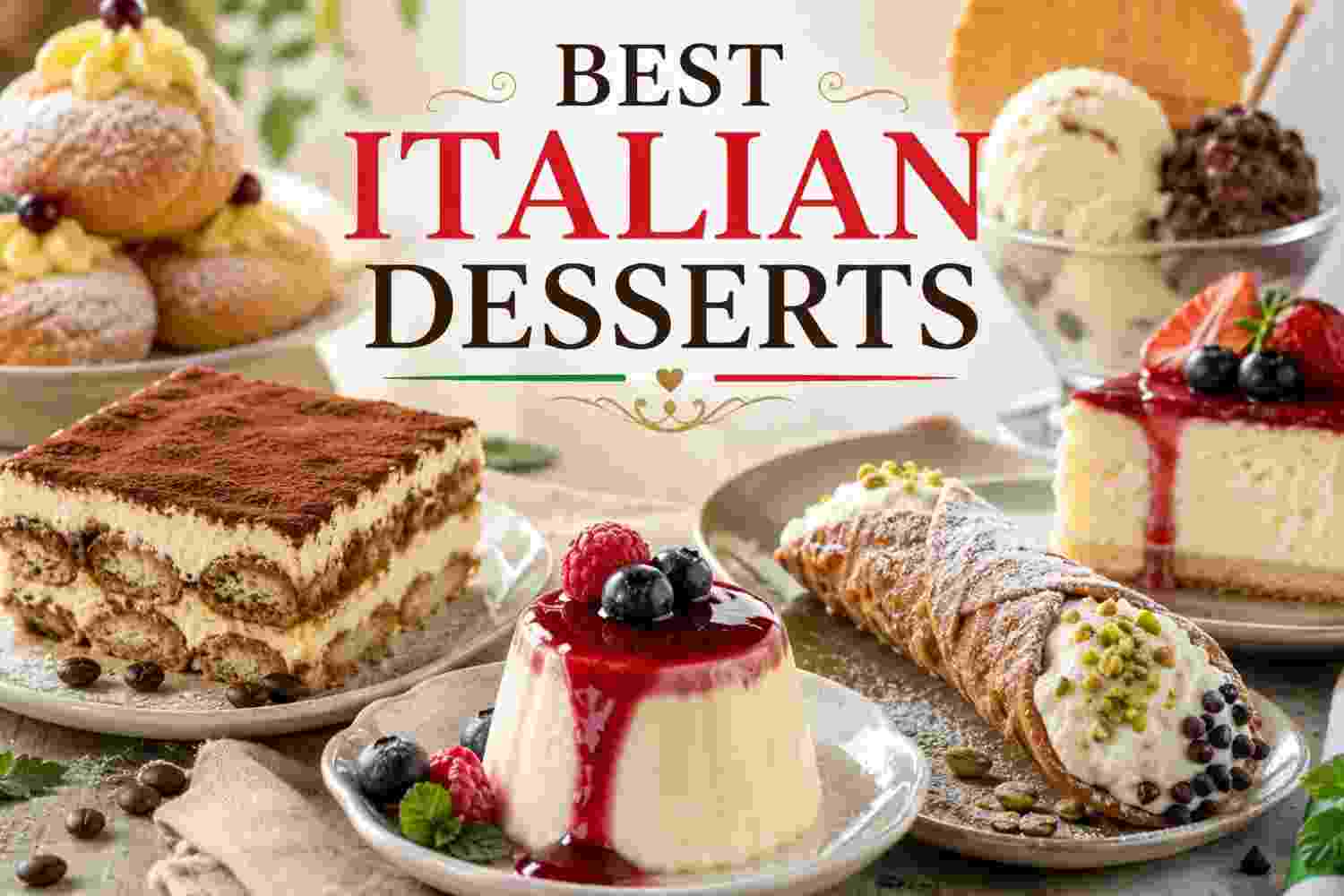
What Are the Best Italian Desserts? The Ultimate Tasting Guide
Finding authentic regional Italian sweets outside of Italy often leads to overly sugary, uninspired disappointments. Generic recipes frequently miss the delicate balance of fresh mascarpone, crisp pastry, and rich espresso, leaving your table lacking true Italian flair. This guide showcases the best italian desserts using traditional culinary standards, helping you savor and create authentic regional specialties at home.
Trust Signals & Author Credentials
- Author: Chef Marco Rossi, Culinary Specialist in Regional Italian Pastry
- Editorial Review: Formatted in accordance with regional heritage standards established by the Accademia Italiana della Cucina.
- Primary Authority Sources:
- Accademia Italiana della Cucina (Official Repository of Italian Culinary Heritage)
- UNESCO Intangible Cultural Heritage Registry (Traditional Foodways)
- Italian Ministry of Agricultural, Food and Forestry Policies (MIPAAF)
What Makes Traditional Italian Sweets So Unique?
Italian pastry making relies on ingredient quality rather than heavy sugars or artificial flavorings. Exploring the best italian desserts requires understanding their simplicity, where fresh dairy, local nuts, and citrus take center stage.
Unlike multi-layered frosted cakes common in Western baking, Italian dolci highlight contrast. A single dessert often combines crunchy elements with silky creams, or hot espresso with cold dairy.
- High-Quality Dairy: Fresh ricotta di bufala, mascarpone, and sweet cream form the foundation of Northern and Southern sweets alike.
- Regional Identity: Every Italian province guards its own native recipes, tied directly to local harvests and religious traditions.
- Minimalist Prep: Most classic recipes focus on three or four core ingredients processed with precise technique.
Tiramisu: The Iconic Coffee-Infused Masterpiece
Tiramisu ranks at the top of every list of the best italian desserts worldwide. Originating in the Veneto region, this chilled dessert balances bitter espresso with rich cream.
The foundation consists of savoiardi (ladyfinger biscuits) lightly dipped in freshly brewed espresso. Bakers layer these sponge biscuits with a whipped mixture of mascarpone cheese, fresh egg yolks, and sugar, finishing the top with a dusting of bitter cocoa powder. Proper preparation avoids soaking the biscuits too long, which preserves their structural integrity and prevents soggy layers.
Sicilian Cannoli: Crisp Shells with Sweet Ricotta
Sicilian cannoli stands out among the best italian desserts from Southern Italy. This iconic treat features a fried pastry tube filled with a smooth, sweetened sheep’s milk ricotta cream.
True Sicilian pastry chefs fry the dough shells using wine-infused dough to create micro-blisters that yield a light, shatteringly crisp crunch. Traditional fillings include candied orange peel, dark chocolate bits, or crushed Bronte pistachios placed at the exposed edges. Always fill cannoli immediately before serving to prevent the fried shell from absorbing moisture from the ricotta.
Creamy Panna Cotta: Northern Italy’s Silky Delight
Panna Cotta proves that the best italian desserts often use basic ingredients brought to perfect temperatures. Originating in Piedmont, this cooked cream dessert offers a velvety texture that gently wobbles when served on a plate.
Chef-level panna cotta relies on simmered heavy cream, sugar, and high-grade vanilla bean, bound lightly with gelatin. The goal is to use just enough setting agent to hold shape while retaining a melt-in-the-mouth consistency. Pair it with a fresh raspberry reduction or a warm caramel drizzle to cut through the richness of the dairy.
Authentic Italian Gelato: How It Beats Standard Ice Cream
Gelato deserves a spot on any guide to the best italian desserts due to its dense texture and intense flavor profile. While often confused with standard ice cream, real gelato follows a distinct production method.
- Lower Butterfat: Gelato contains 4% to 8% butterfat, compared to ice cream’s 10% to 20%, allowing clean flavor transmission.
- Slower Churning: Less air (overrun) enters the mixture during churning, creating a noticeably denser structure.
- Warmer Serving Temperature: Artisans store gelato slightly warmer than ice cream, keeping it soft and palatable.
Affogato al Caffè: The Ultimate Two-Ingredient Treat
Affogato is one of the best italian desserts for coffee lovers who appreciate effortless preparation. The word translates literally to “drowned,” describing the technique used to assemble this dish.
To prepare an authentic affogato, place a single scoop of fior di latte or vanilla gelato into a chilled glass. Immediately pour a freshly pulled shot of hot, concentrated espresso directly over the cold gelato. The contrast creates a luxurious foam and a temperature interplay that yields a rich syrup as you eat.
Neapolitan Babà al Rum: Spongy, Syrup-Soaked Perfection
Babà al Rum earns its status as one of the best italian desserts due to its rich history in Neapolitan bakeries. Adapted from Eastern European origins, Neapolitan bakers perfected this yeast-leavened cake during the 19th century.
The dough undergoes multiple fermentations to develop a soft, open crumb structure similar to a brioche. After baking in mushroom-shaped molds, bakers saturate the warm cakes in a fragrant syrup infused with citrus peel and aged dark rum. A well-made babà releases sweet syrup under light pressure without collapsing or losing its delicate texture.
Sfogliatella: Naples’ Shatteringly Crisp Layered Pastry
Sfogliatella remains one of the best italian desserts for pastry aficionados looking for complex textures. Naples offers two main varieties: Sfogliatella Riccia (flaky and layered) and Sfogliatella Frolla (made with smooth shortcrust pastry).
The Riccia version demands exceptional skill. Bakers roll dough paper-thin, coat it with lard or butter, roll it into a tight log, and slice it into discs. Pressing these discs forms a shell shape filled with semolina cooked in milk, ricotta, candied citrus, and a pinch of cinnamon. When baked, the outer layers separate into dozens of crunchy ridges around the warm, spiced center.
Classic Panettone and Pandoro: Holiday Heritage Sweets
Italian holiday bakeries showcase how the best italian desserts bring families together over shared traditions. Panettone from Milan and Pandoro from Verona lead the winter season across Italy.
- Panettone: A tall, domed sweet bread crafted with natural sourdough starter, studded with candied orange, citron, and sweet raisins.
- Pandoro: A star-shaped, golden cake from Verona featuring a soft, buttery crumb dusted heavily with powdered sugar to resemble snowy Alpine peaks.
Sicilian Granita: Refreshing Citrus and Almond Ice
Sicilian granita offers a semi-frozen treat made from water, sugar, and natural flavorings like fresh lemon juice, wild strawberries, or crushed almonds. Unlike slush drinks or shaved ice, genuine granita crystallizes slowly with frequent stirring to build coarse, flaky ice crystals.
In coastal towns like Messina and Catania, locals eat almond or coffee granita for breakfast alongside a warm, buttery brioche col tuppo.
Zabaglione (Sabayon): The Warm Custard Tradition
Zabaglione is a light custard crafted by whisking egg yolks, granulated sugar, and sweet Marsala wine over a double boiler. The continuous whisking incorporates air, expanding the mixture into a warm, voluminous foam.
Pastry chefs serve this dessert warm in glass chalices paired with crisp savoiardi or amaretti cookies. Its light texture makes it an ideal finish after a heavy multi-course meal.
Master Comparison: Regional Profiles of the Best Italian Desserts
Comparing the best italian desserts helps you pick the right recipe based on preparation time, region, and primary flavor profile.
| Dessert Name | Region of Origin | Primary Ingredients | Texture Profile | Prep Difficulty |
| Tiramisu | Veneto | Mascarpone, Espresso, Savoiardi, Cocoa | Creamy & Soft | Easy (No-Bake) |
| Cannoli | Sicily | Ricotta, Fried Shell, Candied Fruit | Crisp & Smooth | Intermediate |
| Panna Cotta | Piedmont | Heavy Cream, Sugar, Gelatin, Vanilla | Silky & Wobbliness | Easy |
| Babà al Rum | Campania (Naples) | Yeast Dough, Rum Syrup, Citrus | Spongy & Juicy | Advanced |
| Sfogliatella | Campania (Naples) | Laminated Dough, Ricotta, Semolina | Crunchy & Dense | Expert |
| Affogato | Lombardy | Fior di Latte Gelato, Espresso Shot | Hot & Cold Liquid | Very Easy |
Frequently Asked Questions About the Best Italian Desserts
What are the best italian desserts for beginners to make at home?
Tiramisu, Panna Cotta, and Affogato are ideal for beginners. They require no complex pastry techniques, minimal equipment, and come together quickly without baking skills.
Which region produces the best italian desserts?
Sicily and Campania are world-famous for pastry craftsmanship like Cannoli and Sfogliatella. Meanwhile, Northern regions like Veneto and Piedmont excel at dairy-focused, creamy creations like Tiramisu and Panna Cotta.
What makes gelato different from other best italian desserts?
Gelato uses less butterfat than standard ice cream and gets churned at a slower speed. This process incorporates less air, resulting in a denser treat with bolder, more direct flavor delivery.
How do you store leftover Cannoli shells?
Store unfilled cannoli shells in an airtight container at room temperature for up to two weeks. Always keep the ricotta filling separate in the refrigerator and fill the shells right before serving.
Can you make authentic Tiramisu without alcohol?
Yes. Traditional Tiramisu recipes focus on strong espresso and fresh mascarpone cream without added alcohol. While some modern variations add Marsala wine or dark rum, it remains optional.
What is the most famous Italian Christmas dessert?
Panettone from Milan is Italy’s most famous Christmas sweet. This sourdough-based sweet bread contains raisins and candied citrus fruits, taking up to 36 hours of dough fermentation to complete.
Master Italian Baking in Your Own Kitchen
Italian desserts rely on quality over complexity. By choosing fresh mascarpone, genuine sheep’s milk ricotta, and authentic espresso, you can recreate these regional classics in your home kitchen today. Pick one recipe from this guide, source authentic ingredients, and share a true slice of Italian culture at your next table gathering.