What Makes Asian Food So Popular Worldwide?
Finding authentic recipes across vastly different culinary cultures often feels confusing and overwhelming. Westernized takeout menus flatten these ancient traditions into sugary sauces, making you miss out on true depth and regional complexity. This definitive guide decodes essential ingredients, traditional techniques, and regional flavor profiles so you can master authentic Asian food in your own kitchen with complete confidence.
Content reviewed by Chef Mei-Ling Tan, Culinary Historian & Master Instructor at the Global Culinary Institute. Checked against primary culinary data from the Culinary Institute of America, Harvard T.H. Chan School of Public Health, and UNESCO.
Core Regional Divisions of Culinary Traditions
The rich flavors of Asian food span dozens of nations, distinct topographies, and centuries of active trade routes. Culinary historians divide these foodways into five primary geographic zones: East, Southeast, South, Central, and West Asia. Each zone relies on distinct native herbs, staple grains, and heat profiles that create instantly recognizable dishes.
Essential Staples Across Cooking Styles
Rice and noodles serve as the structural backbone for almost every meal across the continent. Soybeans, fish sauce, garlic, fresh ginger, and chilies provide foundational seasoning across varying climates.
- Grains: Jasmine, basmati, sticky rice, and buckwheat noodles.
- Aromatics: Fresh ginger root, garlic, scallions, lemongrass, and galangal.
- Fermented Seasonings: Soy sauce, miso paste, fermented shrimp paste, and fish sauce.
East Asian Cooking: Balance and Umami
East Asian traditions prioritize seasonal freshness, precise knife skills, and umami-rich fermentation. Japanese sushi and dashi emphasize natural, unadorned flavor profiles with minimal spice heat. Chinese stir-frying relies on intense wok heat to create smoky finishes, while Korean dishes utilize rich fermented chili pastes and kimchi. Together, these methods form a highly sophisticated branch of Asian food.
Southeast Asian Cooking: Herbs, Heat, and Acid
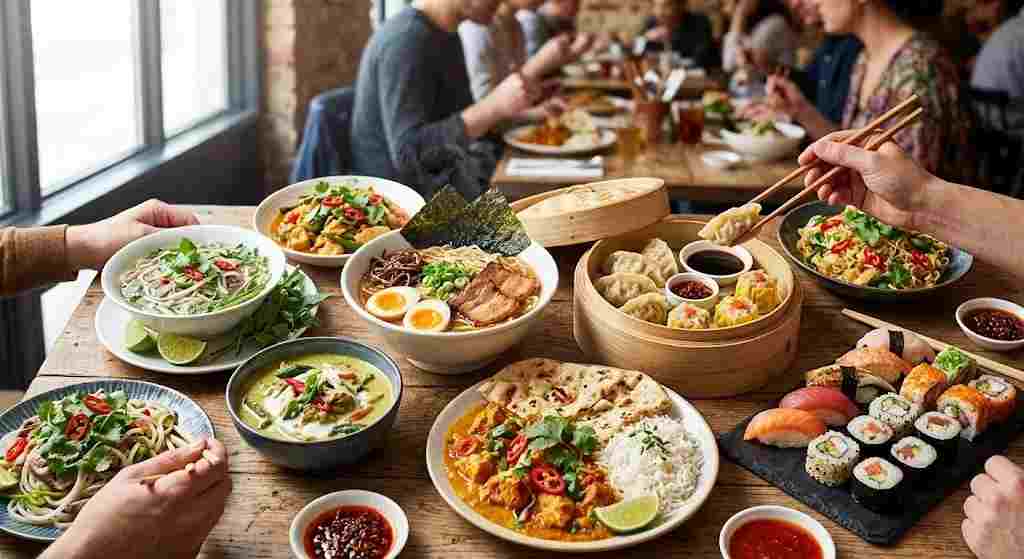
Southeast Asian kitchens balance four core taste elements in every dish: sweet, salty, sour, and spicy. Fresh herbs like Thai basil, cilantro, and mint join rich coconut milk bases to create complex curry pastes. Thai green curry, Vietnamese pho, and Indonesian rendang show how fresh aromatics transform simple proteins. This approach defines a vibrant, herbaceous style of Asian food.
South Asian Cooking: Complex Spice Blending
South Asian culinary traditions build deep flavor profiles using whole, slow-toasted spices. Curries, dal, and tandoori roasts use layered mixtures of cumin, coriander, turmeric, and garam masala. Ghee and yogurt enrich sauces, while flatbreads like naan and roti complement legume-based stews. This region highlights the most aromatic side of Asian food.
Central and West Asian Diets: Grains and Meats
Central and West Asian kitchens feature grilled meat skewers, fragrant rice pilafs, nuts, and dried fruits. Flatbreads, lamb, and yogurt-based marinades dominate table spreads along historic Silk Road routes. Spices like saffron, sumac, and cardamom add delicate floral notes rather than intense chili heat.
Comparative Regional Culinary Matrix
| Region | Primary Staples | Core Aromatics | Cooking Style | Representative Dish |
| East Asia | Short-grain rice, tofu, soy | Ginger, garlic, scallions | Stir-frying, steaming, fermenting | Peking Duck / Kimchi Stew |
| Southeast Asia | Jasmine rice, rice noodles | Lemongrass, galangal, lime | Rapid wok tossing, simmered curries | Pad Thai / Pho |
| South Asia | Basmati rice, lentils, wheat | Cumin, coriander, turmeric | Tempering (tadka), tandoori baking | Chicken Tikka Masala / Dal |
| Central/West Asia | Wheat flatbreads, lamb, pilaf | Saffron, sumac, cardamom | Open-flame grilling, slow roasting | Lamb Kebabs / Rice Pilaf |
Health Benefits of Whole Ingredients and Fermentation
Traditional eating patterns emphasize plant-forward meals, high-fiber legumes, and active digestive enzymes. According to research from the Harvard T.H. Chan School of Public Health, diets rich in fermented foods like kimchi, miso, and tempeh promote gut microbiome diversity and digestive health. Steaming and quick stir-frying preserve essential micronutrients, reinforcing the natural nutritional value in Asian food.
Signature Techniques: High Heat and Slow Simmers
Mastering specific heat applications unlocks authentic textures and complex flavor profiles. Wok cooking uses ultra-high temperatures to sear ingredients while preserving crispness and color. Clay pot cooking and slow curries gently break down tough cuts while infusing spices deep into proteins. These foundational methods form the core of traditional Asian food preparation.
Building an Authentic Home Pantry
Cooking authentic meals requires keeping a few long-lasting items stocked in your pantry. A well-stocked shelf allows you to whip up fast weeknight dishes without special grocery trips.
- Light and Dark Soy Sauce: Provides essential saltiness, rich color, and deep umami notes.
- Toasted Sesame Oil: Adds a nutty finishing aroma to soups, marinades, and stir-fries.
- Fish Sauce: Delivers deep savory undertones to broth and salad dressings.
- Rice Vinegar: Balances rich meats with clean, crisp acidity.
Everything you need for quick Asian food starts with these basic liquids.
Street Food Culture and UNESCO Heritage
Street food hawkers preserve living culinary history across night markets and city stalls. The UNESCO Intangible Cultural Heritage list recognizes Singapore’s hawker culture for its community value and culinary craftsmanship. From Bangkok’s night markets to Osaka’s street stalls, casual dining defines popular street-style Asian food.
Frequently Asked Questions
What defines authentic Asian food?
Authentic cooking relies on regional ingredients, balanced flavor profiles, and traditional heat techniques. It prioritizes fresh produce, natural aromatics, and time-honored preparation over artificial additives or excess refined sugar.
Which Asian region uses the spiciest ingredients?
Southeast Asian and South Asian cuisines frequently incorporate high levels of fresh chilies and hot spices. Regions like Sichuan in China, Southern Thailand, and Andhra Pradesh in India are world-famous for intense heat.
Is traditional Asian cooking healthy?
Yes, traditional preparation methods focus on fresh vegetables, lean proteins, fermented items, and nutrient-rich broth. Research shows these balanced diets in Asian food culture support long-term digestive and heart health.
What is wok hei and why does it matter?
Wok hei translates to “breath of the wok” and refers to the distinct smoky flavor achieved through high-heat wok cooking. It coats ingredients in caramelized sugars and vaporized oil droplets during rapid tossing.
Which key sauces should beginners buy first?
Beginners should start with high-quality light soy sauce, toasted sesame oil, and rice vinegar. These three liquids unlock foundational stir-fries when starting out with Asian food.
How does street food influence regional dining?
Street food acts as an incubator for local flavor innovation and preserves family heritage recipes across generations. It makes regional dining accessible to everyone while keeping culinary customs active in urban life.
Transforming your home cooking starts with understanding these timeless regional principles. Pick up three core pantry liquids, fire up a heavy pan, and explore authentic Asian food at home tonight. Share your favorite regional dish in the comments below or join our culinary community for step-by-step masterclass guides!