Hawaiian Food Near Me: Your Complete Guide to Finding Real Island Flavors Locally
You’re hungry for real island flavors but scrolling through endless search results gets old fast. Most listings point to generic chains that water down the recipes your taste buds actually crave. This guide cuts through the noise and connects you with authentic hawaiian food near me — from fresh poke bowls to plate lunches truly worth the drive.
What Makes Hawaiian Food Different From Other Island Cuisines?
Hawaiian cuisine blends Polynesian roots with Japanese, Filipino, Portuguese, and American influences. This melting pot creates flavors you simply cannot find anywhere else on the planet.
Taro, fresh-caught ahi, and slow-roasted kalua pig form the backbone of the cuisine. Every dish tells a story of migration, adaptation, and deep respect for the land and sea.
When you search for hawaiian food near me, you are not just looking for a meal. You are looking for a cultural experience wrapped in banana leaves and served on a paper plate.
| Cuisine Origin | Key Contribution to Hawaiian Food | Signature Dish Example |
| Native Polynesian | Taro cultivation, imu cooking | Poi, Kalua Pig |
| Japanese | Raw fish preparation, rice | Poke, Spam Musubi |
| Filipino | Vinegar-based marinades | Chicken Adobo (local style) |
| Portuguese | Sweet bread, sausage | Malasadas, Portuguese Sausage |
| American | BBQ techniques, plate lunch format | Loco Moco, Mixed Plate |
Where Can I Find Authentic Hawaiian Food Near Me Right Now?
Start by checking neighborhoods with strong Pacific Islander communities. Cities like Los Angeles, San Diego, Seattle, Las Vegas, and Salt Lake City have thriving Hawaiian populations that support real-deal restaurants.
Open your maps app and type hawaiian food near me now to see what is open this very minute. Filter by ratings above 4.3 stars and read reviews that mention specific dishes like laulau or poke.
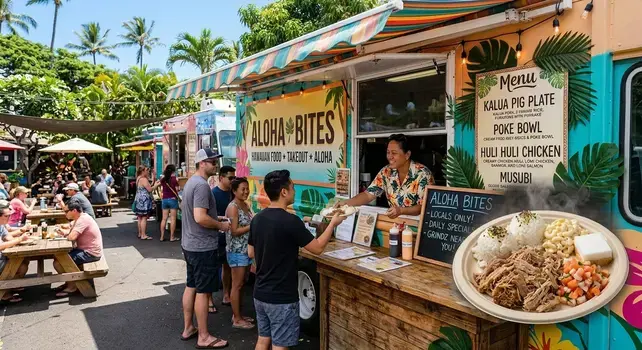
Small family-run spots tucked into strip malls often outperform flashy downtown restaurants. Look for hand-painted signs, short menus, and a line out the door during lunch hour.
Pro Tip: The best hawaiian food near me rarely shows up in sponsored ads. Trust local food blogs, Reddit threads, and word-of-mouth recommendations from people who grew up eating these dishes.
Which Traditional Hawaiian Dishes Should I Try First?
If this is your first time exploring the cuisine, start with the classics. These dishes have stood the test of centuries and remain the heartbeat of every local kitchen.
Poke is the obvious entry point. Fresh ahi tuna cubed and tossed with shoyu, sesame oil, and seaweed delivers clean, ocean-forward flavor in every bite.
Kalua pig comes next. Cooked slowly in an underground imu oven, the meat pulls apart with zero effort and carries a smoky depth that no slow cooker can replicate.
Laulau wraps pork and butterfish in taro leaves, then steams the bundle for hours until everything melts together into a rich, earthy parcel of goodness.
| Dish | Main Ingredients | Flavor Profile | Spice Level |
| Poke | Ahi tuna, shoyu, sesame oil, limu | Clean, savory, umami | Mild |
| Kalua Pig | Pork shoulder, sea salt, ti leaves | Smoky, tender, salty | None |
| Laulau | Pork, butterfish, taro leaves | Earthy, rich, buttery | None |
| Poi | Fermented taro root | Tangy, starchy, subtle | None |
| Loco Moco | Rice, hamburger patty, egg, gravy | Hearty, savory, comforting | Mild |
| Spam Musubi | Spam, rice, nori | Salty, sweet, satisfying | None |
| Haupia | Coconut milk, sugar, cornstarch | Sweet, creamy, cool | None |
How Do I Spot the Best Hawaiian Food Near Me?
Quality reveals itself in small details. Fresh poke should glisten, not sit in a pool of murky sauce. Kalua pig should smell like smoke, not liquid smoke from a bottle.
Check the menu length. Restaurants serving the best hawaiian food near me typically keep their menus tight — fewer than 20 items signals a kitchen that focuses on doing a handful of things exceptionally well.
Ask where the fish comes from. If the staff can tell you the poke is line-caught ahi from Hawaii or sashimi-grade yellowfin, you are in good hands. Vague answers are a red flag.
Read the one-star reviews too. Complaints about “small portions” or “not enough sauce” often come from people unfamiliar with the cuisine. Those reviews can actually confirm authenticity.
Is There Vegan Hawaiian Food Near Me Worth Eating?
Absolutely. Traditional Hawaiian cooking already leans heavily on plants, thanks to the central role of taro, sweet potato, breadfruit, and tropical fruits.
Search for vegan hawaiian food near me and you will find poke bowls built with marinated tofu, hearts of palm, or watermelon “ahi.” Many spots now offer mushroom-based kalua pig that captures the smoky pull-apart texture surprisingly well.
Poi is naturally vegan and gluten-free. Haupia, the coconut pudding, skips dairy in its traditional preparation. Even mac salad can be made plant-based with a simple mayo swap.
| Vegan Hawaiian Dish | Plant-Based Swap | Where to Find It |
| Tofu Poke | Firm tofu marinated in shoyu and sesame | Most poke shops |
| Mushroom Kalua | Shredded oyster or king trumpet mushrooms | Specialty Hawaiian restaurants |
| Poi | No swap needed — already vegan | Traditional Hawaiian spots |
| Haupia | No swap needed — already vegan | Hawaiian bakeries and restaurants |
| Veggie Plate Lunch | Grilled tofu, rice, mac salad (vegan mayo) | Local Hawaiian food trucks |
What Does a Classic Hawaiian Plate Lunch Include?
The plate lunch is the soul of local Hawaiian eating. Two scoops of white rice, one scoop of creamy macaroni salad, and a generous protein — that is the holy trinity.
Proteins rotate between chicken katsu, teriyaki beef, kalua pig, fried mahi-mahi, and loco moco. Each option transforms the plate into a completely different experience.
The mac salad is non-negotiable. It should be slightly overcooked, heavily dressed with Best Foods mayo, and chilled until the flavors fuse together. If the mac salad is bad, walk out.
When you order local hawaiian food near me, the plate lunch is the fastest way to gauge a restaurant’s quality. Get it right and everything else on the menu will follow.
How Fresh Should Poke Be at Local Hawaiian Restaurants?
Poke should be cut to order or prepared in small batches throughout the day. The fish should look bright, smell like the ocean, and feel firm to the touch — never slimy or dull.
Avoid places that pile pre-marinated poke behind a glass counter for hours. The acid in shoyu and the salt in the marinade will “cook” the fish over time, turning it mushy and gray.
The freshest poke shops display whole fish fillets and cube them after you place your order. This extra 60-second wait is the difference between good poke and life-changing poke.
Can I Find Traditional Hawaiian Food Near Me Outside Hawaii?
Yes, and the options grow every year. Mainland cities with large Hawaiian and Pacific Islander diasporas carry the strongest offerings.
Las Vegas, in particular, has earned the nickname “the Ninth Island” because of its massive Hawaiian population. You will find traditional hawaiian food near me in Vegas that rivals what you would eat in Honolulu.
Southern California, the Pacific Northwest, and parts of Texas also host excellent Hawaiian restaurants. Food trucks and pop-ups bring the cuisine to smaller cities that lack brick-and-mortar options.
| City | Hawaiian Population Strength | Best Dishes to Find |
| Las Vegas, NV | Very High | Plate lunches, poke, spam musubi |
| Los Angeles, CA | High | Poke, laulau, loco moco |
| San Diego, CA | High | Poke bowls, plate lunches |
| Seattle, WA | Moderate-High | Poke, kalua pig, shave ice |
| Salt Lake City, UT | Moderate | Plate lunches, laulau |
| Houston, TX | Growing | Poke, Hawaiian BBQ plates |
What Are the Top Hawaiian Food Ingredients to Know?
Understanding the ingredients helps you order with confidence and appreciate what lands on your plate.
Taro is the foundation of Native Hawaiian agriculture. It becomes poi when pounded and fermented, and its leaves wrap laulau.
Limu (seaweed) adds briny crunch to poke and salads. Inamona, a condiment made from roasted kukui nut, brings a nutty richness that defines traditional poke.
Ahi tuna and ono (wahoo) are the most common fish. Mahi-mahi shows up grilled on plate lunches. All three should taste clean and sweet, never fishy.
How Do Local Hawaiian Food Spots Compare to Chain Restaurants?
Chain Hawaiian restaurants prioritize speed and consistency over authenticity. They often use frozen fish, pre-made sauces, and shortcut cooking methods that strip the soul from every dish.
Local spots cook kalua pig for 8 to 12 hours in real smoke. They hand-mix their poke marinades each morning. They make mac salad from scratch because they know their regulars will notice the difference.
The price gap is smaller than you think. A plate lunch at a family-run shop costs roughly the same as a chain version, but the flavor and portion size blow the chain out of the water.
| Factor | Local Hawaiian Spot | Chain Restaurant |
| Fish Freshness | Sashimi-grade, often daily | Frozen, pre-cubed |
| Kalua Pig Method | Imu or slow-smoked | Liquid smoke, oven |
| Mac Salad | House-made, Best Foods mayo | Pre-packaged or bulk |
| Menu Size | 10–20 focused items | 40+ items across cuisines |
| Flavor Depth | Layered, complex | One-note, sauce-heavy |
| Price (Plate Lunch) | $12–$18 | $13–$19 |
When Is the Best Time to Order Hawaiian Food Near Me Now?
Lunch is prime time. Most Hawaiian restaurants and food trucks peak between 11:00 AM and 1:30 PM, which is when the poke is freshest and the plate lunches come off the line hot.
Arrive early if you want the full menu. Popular spots sell out of kalua pig and laulau by 2:00 PM on busy days. Showing up at 11:00 AM guarantees you get first pick.
Dinner service often shifts toward Hawaiian BBQ and fusion dishes. If you want the most authentic hawaiian food near me, lunch is the move.
What Should I Expect to Pay for Hawaiian Food Near Me?
Hawaiian food is one of the most affordable cuisines you can eat. Plate lunches typically run $12 to $18, and poke bowls land between $13 and $20 depending on the protein.
Family-style platters for two to four people cost $30 to $55 at most local spots. That works out to roughly $10 to $14 per person for a massive, filling meal.
Shave ice and malasadas add $4 to $8 to your total and make the perfect sweet finish.
| Item | Average Price Range | Portion Size |
| Poke Bowl (regular) | $13–$17 | 2 scoops protein, rice, toppings |
| Poke Bowl (large) | $17–$22 | 3 scoops protein, rice, toppings |
| Plate Lunch | $12–$18 | Protein, 2 rice, mac salad |
| Spam Musubi (each) | $3–$5 | Single serving snack |
| Kalua Pig Plate | $14–$19 | Generous, with sides |
| Family Platter (feeds 3–4) | $35–$55 | Multiple proteins, large sides |
| Shave Ice | $4–$7 | Large cup with syrup |
| Malasadas (dozen) | $12–$18 | Fresh, warm, sugar-coated |
Frequently Asked Questions
What is the most popular Hawaiian dish?
Poke holds the top spot worldwide. Fresh ahi tuna cubed and seasoned with shoyu, sesame oil, and limu delivers bold flavor with minimal preparation. On the islands themselves, plate lunches and kalua pig rival poke in daily popularity.
Is Hawaiian food spicy?
Most traditional Hawaiian food is not spicy. The cuisine relies on salt, smoke, and natural umami rather than heat. Some modern poke shops offer sriracha or chili flakes as optional toppings, but the base recipes stay mild.
Can I get Hawaiian food delivered near me?
Yes. Most poke shops and plate lunch spots partner with DoorDash, Uber Eats, or Grubhub. Poke travels well if the restaurant packs the sauce separately. Plate lunches hold up during short drives but lose crispness on longer deliveries.
What is the difference between Hawaiian and Polynesian food?
Hawaiian food is a subset of Polynesian cuisine with distinct Japanese, Filipino, and Portuguese influences unique to the islands. Broader Polynesian food includes Samoan, Tongan, and Tahitian dishes that use different staple ingredients like breadfruit and coconut cream more heavily.
Is poke considered traditional Hawaiian food?
Yes. Native Hawaiians prepared poke long before Western contact, seasoning raw reef fish with sea salt, seaweed, and roasted kukui nut. The modern ahi-and-shoyu version evolved with Japanese immigration in the late 1800s but remains rooted in original Hawaiian practice. (Source: “The History of Poke” in Smithsonian Magazine)
How do I know if a Hawaiian restaurant is authentic?
Look for a short menu, family ownership, and dishes like laulau, poi, and kalua pig prepared using traditional methods. Authentic spots source fresh fish daily and make mac salad in-house. Check reviews from customers who mention growing up in Hawaii — their opinions carry real weight.
Your Next Step Starts With a Single Search
You now know exactly what to look for, what to order, and how to separate real island cooking from watered-down imitations. The hawaiian food near me search you run tonight can lead you to a plate lunch that changes the way you think about food entirely.
Stop settling for sad, pre-packaged poke from the grocery store deli. Find a local family-run spot, order the kalua pig plate with extra mac salad, and taste what generations of tradition actually deliver.
Pull up your maps app right now. Type in hawaiian food near me. Pick the highest-rated local spot within five miles. Go eat.