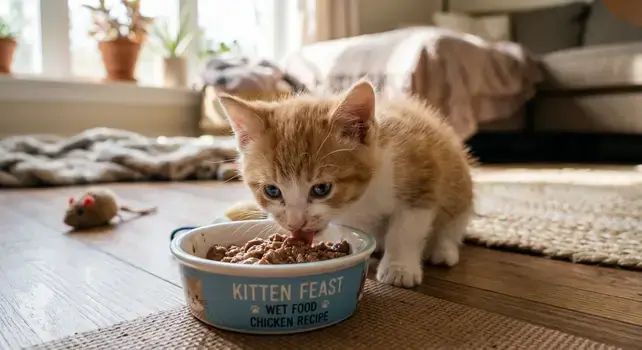
Wet Kitten Food: The Complete Feeding Guide Every New Cat Parent Needs
Your tiny furball just came home, and suddenly every mealtime feels like a high-stakes decision. Pick the wrong food, and you risk stunted growth, digestive upset, or long-term health problems. This guide cuts through the noise and gives you a clear, vet-backed roadmap to choosing and serving the right wet kitten food for your growing cat.
Why Do Kittens Require Wet Kitten Food?
Wet kitten food is a moisture-rich, protein-dense meal formulated specifically for cats under 12 months old. It comes in cans, pouches, or trays and contains roughly 70–80% water.
Kittens burn energy at a staggering rate. Their small stomachs cannot hold large volumes of dry kibble, so calorie-dense wet kitten food delivers the fuel they need in smaller, manageable portions.
The high moisture content also protects developing kidneys. Cats evolved as desert animals with a low thirst drive, making dietary water essential from day one.
| Feature | Wet Kitten Food | Adult Wet Cat Food |
| Protein Content | 10–14% minimum | 8–10% minimum |
| Fat Content | 6–9% | 4–6% |
| Calories per Can | 90–130 kcal | 70–100 kcal |
| Moisture Level | 75–82% | 70–78% |
| Calcium/Phosphorus Ratio | 1.1:1 to 1.5:1 | 1:1 to 1.2:1 |
When Is the Right Time to Start Giving Wet Kitten Food?
Most breeders and shelters begin introducing wet kitten food around four weeks of age. This weaning window marks the transition from mother’s milk to solid meals.
Start by mixing a small spoonful of pate-style food with kitten milk replacer. Over the course of two to three weeks, gradually thicken the mixture until your kitten consumes the food directly from the bowl.
By eight weeks, your kitten should eat fully solid wet meals without any formula mixed in.
| Kitten Age | Feeding Milestone |
| 0–4 Weeks | Mother’s milk or bottle formula only |
| 4–5 Weeks | Slurry of wet food + milk replacer |
| 6–7 Weeks | Mostly solid wet food, thin consistency |
| 8–12 Weeks | Full solid wet kitten food, 4 meals daily |
| 3–6 Months | 3 meals daily, increasing portions |
| 6–12 Months | 2–3 meals daily, approaching adult portions |
What is the recommended daily amount of wet kitten food?
Your kitten’s age, weight, and degree of activity all affect portion size.A general rule from the Cornell Feline Health Center suggests feeding roughly 250–300 calories per kilogram of body weight for kittens under six months.
A typical 3-ounce can of wet kitten food contains about 90–110 calories. That means a two-pound, eight-week-old kitten needs roughly two to three small cans spread across four meals each day.
Always check the feeding chart printed on the label. Every brand varies in caloric density.
| Kitten Weight | Daily Calories Needed | Approximate Cans (3 oz) |
| 1 lb (0.5 kg) | 125–150 kcal | 1.5 cans |
| 2 lbs (0.9 kg) | 225–270 kcal | 2.5 cans |
| 3 lbs (1.4 kg) | 300–360 kcal | 3–3.5 cans |
| 5 lbs (2.3 kg) | 350–420 kcal | 3.5–4 cans |
| 8 lbs (3.6 kg) | 320–380 kcal | 3–3.5 cans |
What Nutrients Must Wet Kitten Food Contain?
Growing cats need a precise nutrient profile that adult formulas simply do not provide. The Association of American Feed Control Officials (AAFCO) sets the minimum standards for “growth and reproduction” life-stage labeling.
Your chosen wet kitten food must meet or exceed these benchmarks:
- Crude Protein: Minimum 30% on a dry-matter basis to build muscle and tissue.
- Taurine: At least 0.1% to prevent heart disease and vision loss.
- Cats are unable to manufacture arachidonic acid, an important fatty acid, on their own.
- DHA (Docosahexaenoic Acid): Supports brain and retinal development during the first year.
- Calcium and Phosphorus: Balanced at a 1.1:1 to 1.5:1 ratio for proper bone growth.
| Nutrient | AAFCO Minimum (Growth) | Why It Matters |
| Protein | 30% dry matter | Muscle and organ development |
| Fat | 9% dry matter | Energy and coat health |
| Taurine | 0.1% | Heart function and eyesight |
| Calcium | 1.0% | Bone and teeth formation |
| Phosphorus | 0.8% | Works with calcium for skeletal growth |
| DHA | 0.01% | Brain and vision development |
| Vitamin A | 9,000 IU/kg | Immune support and cell growth |
Wet Kitten Food vs Dry Kibble: Which Is Better?
This debate fills every cat forum on the internet. The honest answer is that wet kitten food holds a clear edge for young cats, especially during the first six months.
Wet food delivers hydration, easier chewing for tiny teeth, and higher protein density per calorie. Dry kibble offers convenience and a longer shelf life once opened.
Many veterinarians recommend a combination approach. Serve wet meals at scheduled times and leave a small amount of kibble for grazing overnight.
| Comparison Factor | Wet Kitten Food | Dry Kibble |
| Moisture | 75–82% | 6–10% |
| Protein Density | Higher per calorie | Moderate |
| Dental Benefit | Minimal | Slight abrasive action |
| Palatability | Excellent | Good |
| Cost per Serving | Higher | Lower |
| Shelf Life (Opened) | 24–48 hours refrigerated | Weeks in sealed container |
| Ease of Chewing | Very easy for young kittens | Hard for tiny teeth |
Which Wet Kitten Food Brands Will Be the Best in 2025?
Choosing a brand comes down to ingredient quality, AAFCO compliance, and your kitten’s individual tolerance. These five brands consistently earn high marks from veterinarians and pet nutritionists.
- For kittens aged 4 to 12 months, Royal Canin Kitten Instinctive offers thin slices in gravy.
- Hill’s Science Diet Kitten: Chicken-based pate with DHA from fish oil.
- Wellness CORE Kitten: Grain-free, high-protein turkey and chicken liver formula.
- Purina Pro Plan Kitten: Chicken and rice entree with added taurine and DHA.
- Blue Buffalo Wilderness Kitten: Grain-free chicken recipe with life-source vitamins.
Always introduce one brand at a time. Watch for vomiting, diarrhea, or refusal to eat over a seven-day trial period.
| Brand | Primary Protein | Grain-Free? | AAFCO Statement | Price Range |
| Royal Canin Kitten | Chicken | No | Growth | $$ |
| Hill’s Science Diet | Chicken | No | Growth | $$ |
| Wellness CORE | Turkey/Chicken | Yes | Growth | $$$ |
| Purina Pro Plan | Chicken | No | Growth | $ |
| Blue Buffalo Wilderness | Chicken | Yes | Growth | $$ |
How Do You Transition a Kitten to Wet Food?
Switching too fast causes stomach upset. Follow a gradual seven-day plan to move your kitten onto a new wet kitten food without triggering diarrhea or appetite loss.
- Days 1-2: Combine 75% of the current food with 25% of the new food.
- Days 3–4: Increase to 50% new, 50% old.
- Days 5–6: Serve 75% new food, 25% old.
- Day 7: Offer 100% new food.
If your kitten develops loose stools at any stage, hold at the current ratio for an extra day before advancing. Patience prevents setbacks.
| Day | New Food % | Old Food % | What to Watch For |
| 1–2 | 25% | 75% | Appetite changes |
| 3–4 | 50% | 50% | Stool consistency |
| 5–6 | 75% | 25% | Energy levels |
| 7 | 100% | 0% | Overall acceptance |
Can Adult Cats Eat Wet Kitten Food?
Yes, but only as a short-term solution. Wet kitten food packs more calories, fat, and protein than an adult cat needs for maintenance.
Feeding it long-term to a sedentary adult cat leads to weight gain and potential kidney strain from excess phosphorus. If you have a multi-cat household, separate meal times to keep adults on their own formula.
Pregnant or nursing queens are the exception. They benefit from the extra calories and nutrients in kitten formulas throughout gestation and lactation.
| Cat Life Stage | Kitten Food Safe? | Reason |
| Adult (1–7 years) | Short-term only | Risk of obesity |
| Senior (7+ years) | Not recommended | Excess phosphorus stresses kidneys |
| Pregnant Queen | Yes | Extra calories support fetal growth |
| Nursing Queen | Yes | High energy demand during lactation |
| Overweight Cat | No | Calorie density too high |
What Wet Kitten Food Is Best for Sensitive Stomachs?
Some kittens react poorly to common proteins like chicken or beef. Signs include chronic soft stools, gas, vomiting, or excessive scratching.
Look for limited-ingredient wet kitten food formulas that use a single novel protein such as duck, rabbit, or salmon. Avoid products with artificial colors, carrageenan, or heavy gravy thickeners.
The ASPCA recommends working with your veterinarian to rule out food allergies before switching formulas repeatedly.
| Sensitivity Type | Recommended Protein | Ingredients to Avoid |
| Chicken Allergy | Duck or Turkey | Chicken, chicken broth, chicken fat |
| Grain Sensitivity | Any single protein | Wheat, corn, soy |
| Dairy Intolerance | Fish or Rabbit | Milk powder, cheese, whey |
| General Upset | Salmon or Lamb | Carrageenan, guar gum, artificial dyes |
How Do You Store Wet Kitten Food Safely?
Improper storage turns a nutritious meal into a bacterial breeding ground. Once you open a can or pouch, refrigerate leftovers immediately at or below 40°F (4°C).
Use opened wet kitten food within 24 to 48 hours. Cover the can with a silicone lid or transfer the contents to an airtight glass container.
Never leave wet food sitting in your kitten’s bowl for more than 30 minutes at room temperature. Discard any uneaten portions after that window closes.
| Storage Scenario | Maximum Safe Duration | Temperature |
| Unopened Can | Until expiration date | Cool, dry pantry |
| Opened Can (Refrigerated) | 24–48 hours | Below 40°F (4°C) |
| Opened Pouch (Refrigerated) | 24 hours | Below 40°F (4°C) |
| Left in Bowl (Room Temp) | 30 minutes | 68–72°F (20–22°C) |
| Frozen (Thawed) | 24 hours | Refrigerator thaw only |
What Ingredients Should You Avoid in Wet Kitten Food?
Not all labels tell the full story. Marketing terms like “natural” or “premium” carry no legal definition in pet food. Read the ingredient list yourself.
Steer clear of these red flags when shopping for wet kitten food:
- Meat by-products listed as the first ingredient (named by-products like “chicken by-products” are acceptable in moderation).
- artificial preservatives such ethoxyquin, BHA, and BHT.
- Added sugars including corn syrup, sucrose, or caramel coloring.
- Carrageenan, a thickener linked to gastrointestinal inflammation in animal studies.
- Generic “meat” or “animal” sources without a named species.
How Does Wet Kitten Food Support Hydration?
Cats naturally obtain most of their water from prey. A mouse is roughly 70% water. Dry kibble provides almost none of that moisture, placing the entire hydration burden on your kitten’s water bowl.
A diet built around wet kitten food mirrors the water intake a kitten would get in the wild. This reduces the risk of urinary tract issues, kidney stress, and chronic dehydration later in life.
Kittens fed exclusively dry food often drink less water than they need, even when fresh water is always available. Wet food closes that gap effortlessly.
| Diet Type | Daily Water Intake (per kg body weight) | Urine Concentration |
| 100% Wet Food | 40–60 mL | Dilute, healthy |
| 50/50 Wet + Dry | 30–45 mL | Moderate |
| 100% Dry Kibble | 20–30 mL | Highly concentrated |
Frequently Asked Questions
How often should I feed my kitten wet food?
Feed kittens under six months four times per day. Reduce to three meals between six and nine months. By 12 months, two meals daily is standard.
Is grain-free wet kitten food better?
Not necessarily. Grain-free diets only benefit kittens with confirmed grain allergies. Recent FDA investigations have raised questions about grain-free formulas and heart health in cats. Choose based on your kitten’s individual needs.
Can I mix wet and dry kitten food?
Yes. Many owners serve wet food at scheduled mealtimes and leave a small portion of dry kibble for snacking. Just track total daily calories to prevent overfeeding.
How long does opened wet kitten food last?
Refrigerate opened cans or pouches and use them within 24 to 48 hours. Discard any food left at room temperature for more than 30 minutes.
What is the best wet kitten food for weaning?
Choose a smooth pate or mousse texture. Royal Canin Mother & Babycat and Hill’s Science Diet Kitten both offer soft consistencies ideal for four-to-eight-week-old kittens.
Does wet kitten food cause dental problems?
Wet food alone does not cause dental disease. Genetics, oral hygiene, and overall diet quality play far bigger roles. Schedule regular veterinary dental checkups starting at one year of age.
Your Kitten’s Health Starts at the Bowl
Every meal you serve shapes your kitten’s bones, brain, coat, and immune system for the rest of their life. Choosing a high-quality wet kitten food is one of the simplest and most powerful decisions you can make as a new cat parent.
Start with a trusted brand that meets AAFCO growth standards. Follow the transition schedule. Watch your kitten’s energy, stool quality, and appetite closely during the first few weeks.
Your kitten will tell you what works. Listen to them, stay consistent, and book that first vet visit within the first week of bringing them home. The right nutrition today builds the healthy adult cat you will share your life with for the next 15 to 20 years.