Danish Food Guide: Every Traditional Dish, Flavor, and Food Tradition You Need to Know
You want to explore Denmark’s culinary scene, but endless travel blogs repeat the same three dishes. That frustration keeps you from experiencing the real depth of Danish food. This guide cuts through the noise. You will discover every essential dish, ingredient, and tradition that makes Danish food one of Europe’s most exciting and underrated cuisines.
What Makes Danish Food So Unique Compared to Other European Cuisines?
Danish food grew out of necessity. Long winters, short growing seasons, and a coastline stretching over 7,300 kilometers shaped what Danish families cooked and preserved for centuries.
Salt, smoke, and fermentation became the primary tools for survival. These methods created bold, layered flavors that still define Danish food today.
Denmark sits at the crossroads of Scandinavia and mainland Europe. This geographic position allowed German, Swedish, and French cooking techniques to blend into local traditions.
As a result, the food has a rustic yet sophisticated feel.Simple ingredients receive extraordinary attention.
| Factor | How It Shapes the Cuisine |
| Climate | Preservation methods like pickling, smoking, and curing |
| Geography | Heavy reliance on seafood, rye, and root vegetables |
| History | German and French influence on baking and sauces |
| Culture | Hygge philosophy encourages slow, communal meals |
| Agriculture | World-class dairy, pork, and grain production |
What Are the Most Popular Traditional Danish Dishes You Should Eat First?
Start with the classics. These dishes appear on dinner tables, holiday spreads, and restaurant menus across Denmark year-round.
Pork and veal are used to make the pan-fried meatballs known as frikadeller.Danish families serve them with boiled potatoes, brown gravy, and pickled red cabbage.
Flæskesteg is a roast pork dish with crackling skin. It holds the title of Denmark’s national dish and anchors every Christmas dinner.
The Danish government officially voted it the national dish in 2014.
| Dish | Main Ingredients | When to Eat It |
| Frikadeller | Pork, veal, onion, egg | Weeknight dinners |
| Flæskesteg | Pork roast, rind, salt | Christmas and Sunday roasts |
| Stegt flæsk | Pork belly, parsley, cream | Year-round comfort food |
| Boller i karry | Meatballs, curry sauce, rice | Family lunches |
| Medisterpølse | Spiced pork sausage | Autumn and winter |
How Did Smørrebrød Become the Most Famous Danish Food in the World?
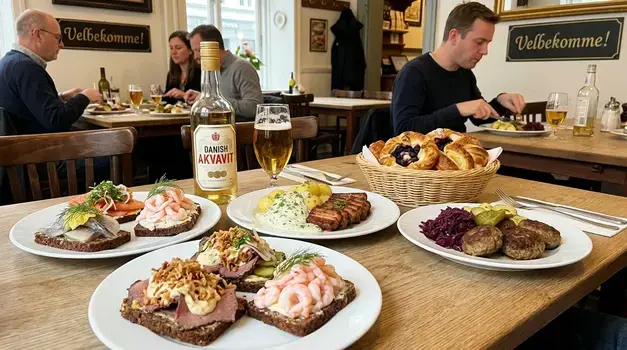
Smørrebrød translates to “butter and bread.” That simple name hides an art form that Danish chefs have perfected over 150 years.
A proper smørrebrød starts with a dense slice of rugbrød (dark rye bread). The baker layers butter, then piles on toppings in a specific order to balance texture and flavor.
Classic combinations include pickled herring with raw onion and capers. Another favorite pairs roast beef with remoulade, crispy onions, and horseradish.
The open-faced format lets every ingredient shine. Nothing hides underneath, so quality matters at every level.
| Smørrebrød Type | Toppings | Best Paired With |
| Dyrlægens natmad | Liver pâté, salt beef, aspic, onion | Cold beer or akvavit |
| Stjerneskud | Fried and boiled plaice, shrimp, caviar | White wine |
| Rullepølse | Rolled sausage, meat jelly, onion | Lager |
| Leverpostej | Warm liver pâté, bacon, mushrooms | Dark beer |
| Æg og rejer | Boiled egg, Greenland shrimp, dill | Sauvignon Blanc |
Source: VisitDenmark (visitdenmark.com)
What Danish Pastries Should You Try Before You Die?
The world calls them “Danish pastries.” In Denmark, they go by the name wienerbrød, which means “Viennese bread.”
Austrian bakers brought the laminated dough technique to Copenhagen during a bakery strike in 1850. Danish bakers adapted the method and added more butter and egg.
The result is a flaky, golden pastry that shatters when you bite into it. Each layer separates cleanly thanks to the high fat content.
A spandauer holds a pool of vanilla custard or raspberry jam in its center. A kanelsnegl (cinnamon snail) delivers spirals of cinnamon sugar and cardamom.
| Pastry Name | Filling | Texture |
| Spandauer | Custard or jam | Flaky, buttery |
| Kanelsnegl | Cinnamon, cardamom, sugar | Soft spiral, sticky |
| Tebirkes | Poppy seeds, remonce | Crunchy top, tender inside |
| Frøsnapper | Sesame, poppy, remonce | Dense, chewy |
| Kringles | Marzipan, raisins, icing | Rich, layered |
Which Danish Foods Define Hygge and Comfort Culture?
Hygge has no direct English translationThe most accurate definition is “cozy contentment shared with those you love.”
The creation of hygge is mostly dependent on food.Warm stews, freshly baked bread, and hot drinks set the mood during dark Scandinavian evenings.
Æbleskiver are round pancake balls cooked in a special cast-iron pan. Families gather around the stove in December, flipping them with knitting needles.
Gløgg (mulled wine with almonds and raisins) warms hands and spirits at Christmas markets across Copenhagen and Aarhus.
| Hygge Food | Season | Why It Creates Comfort |
| Æbleskiver | December | Communal cooking, sweet aroma |
| Gløgg | November–January | Warmth, spice, shared toasts |
| Hot chocolate | October–March | Rich, creamy, nostalgic |
| Rye bread and cheese | Year-round | Simple, satisfying, familiar |
| Pea soup (gule ærter) | Winter | Thick, hearty, filling |
What Does a Typical Danish Breakfast Look Like?
A Danish breakfast stays simple and unhurried. Most families sit down to a spread of rye bread, sliced cheese, cold cuts, and soft-boiled eggs.
Yogurt with muesli and fresh berries also appears on many tables. Children often drink a glass of cold milk or juice alongside their meal.
On weekends, the table expands. Freshly baked rolls (rundstykker) arrive from the local bakery, still warm inside paper bags.
Jam, honey, and chocolate spread (pålægschokolade) sit next to the butter dish. This small ritual sets a calm tone for the entire day.
| Breakfast Item | Danish Name | Frequency |
| Rye bread with cheese | Rugbrød med ost | Daily |
| Soft-boiled egg | Blødkogt æg | Daily |
| Yogurt with muesli | Yoghurt med mysli | Daily |
| Fresh bakery rolls | Rundstykker | Weekends |
| Pålægschokolade | Pålægschokolade | Weekends |
How Do Danes Celebrate with Food During Holidays and Festivals?
Holidays in Denmark revolve around the dinner table. Each celebration carries specific dishes that families prepare the same way every year.
Christmas Eve (juleaften) features roast duck or flæskesteg, caramelized potatoes, and red cabbage. The meal ends with risalamande, a cold rice pudding hiding a single whole almond.
Easter brings pickled herring platters, lamb, and decorated eggs. Midsummer (Sankt Hans) calls for bonfire gatherings with grilled sausages and cold beer.
| Holiday | Signature Dish | Tradition |
| Christmas Eve | Roast duck, flæskesteg | Find the almond in risalamande |
| Easter | Pickled herring, lamb | Painted eggs, long lunches |
| Sankt Hans | Grilled sausages | Bonfire on the beach |
| Fastelavn | Fastelavnsboller | Children dress up and sing |
| Mortensaften | Roast goose | Honors St. Martin’s Day |
What Are the Best Danish Street Foods to Grab in Copenhagen?
Copenhagen’s street food scene exploded over the last decade. Food halls like Reffen and Torvehallerne draw locals and tourists alike.
You will find pølser (hot dogs) from red wagons on nearly every corner. A classic rød pølse comes with remoulade, mustard, crispy onions, and pickled cucumbers.
Fish cakes (fiskefrikadeller) appear at harbor-side stalls. Vendors fry them to order and serve them on rye bread with lemon and tartar sauce.
| Street Food | Location | Price Range |
| Rød pølse | Street wagons citywide | 35–50 DKK |
| Fiskefrikadeller | Torvehallerne, Nyhavn | 50–75 DKK |
| Smørrebrød to go | Food halls | 60–90 DKK |
| Æbleskiver | Tivoli, Christmas markets | 40–60 DKK |
| Grilled seafood | Reffen, Nordhavn | 80–120 DKK |
Where Can You Find Authentic Danish Food Outside Denmark?
Danish restaurants have opened in major cities worldwide. New York, London, Tokyo, and Sydney all host establishments that follow traditional Danish recipes.
Noma in Copenhagen put Danish food on the global map when it earned multiple “World’s Best Restaurant” titles. Chef René Redzepi championed local foraging and seasonal cooking.
That movement inspired a wave of New Nordic restaurants abroad. These kitchens source regional ingredients but apply Danish techniques and philosophy.
For home cooks, Danish specialty shops and Scandinavian delis sell rugbrød, pickled herring, and remoulade in most large cities.
| City | Notable Danish Spot | Specialty |
| New York | Smør | Smørrebrød, pastries |
| London | Scandinavian Kitchen | Nordic lunch boxes |
| Tokyo | Restaurant Amass pop-ups | New Nordic tasting menus |
| Sydney | Copenhagen Social | Danish brunch, open-faced sandwiches |
| Berlin | Freneks | Danish pastries, coffee |
What Ingredients Form the Backbone of Danish Cooking?
Danish kitchens rely on a short list of high-quality staples. The cold climate limits variety, so cooks maximize flavor from what grows locally.
Rye flour produces the dense, sour rugbrød that anchors nearly every meal. Danish bakers ferment their rye dough for up to 24 hours.
Butter from Danish cows carries a higher fat content than most European varieties. Lurpak remains the most recognized brand worldwide.
Dill, parsley, and chives provide the fresh herbal notes that cut through rich meats and creamy sauces.
| Ingredient | Role in Cooking | Seasonal Availability |
| Rye flour | Bread, porridge | Year-round |
| Butter | Baking, frying, finishing | Year-round |
| Pork | Roasts, sausages, meatballs | Year-round |
| Herring | Pickling, frying, smoking | Spring and autumn |
| Dill | Fish dishes, sauces, garnish | Summer |
| Root vegetables | Stews, sides, mashes | Autumn and winter |
Source: The Danish Veterinary and Food Administration (foedevarestyrelsen.dk)
How Has New Nordic Cuisine Transformed Danish Food?
The New Nordic Kitchen Manifesto appeared in 2004. Twelve chefs, including René Redzepi and Claus Meyer, signed a pledge to cook with local, seasonal, and wild ingredients.
This movement pulled Danish food away from heavy French-influenced sauces and toward foraged herbs, sea buckthorn, and fermented vegetables.
Noma became the global symbol of this shift. The restaurant served dishes like live shrimp with dill and moss oil, challenging every expectation of fine dining.
Today, the New Nordic philosophy filters down to everyday cooking. Danish supermarkets now stock locally foraged mushrooms, seaweed salt, and cold-pressed rapeseed oil.
| Old Approach | New Nordic Approach |
| Imported spices | Wild herbs and flowers |
| Heavy cream sauces | Fermented juices and broths |
| Year-round menus | Strictly seasonal menus |
| French technique focus | Nordic preservation methods |
| Formal plating | Natural, organic presentation |
What Danish Desserts Will Satisfy Your Sweet Tooth?
Danes take their sweets seriously. Bakeries fill their windows with layered cakes, fruit tarts, and cream-filled pastries every morning.
Kransekage is a towering ring cake made from marzipan, sugar, and egg whites. Families stack the rings for weddings and New Year’s Eve.
Rødgrød med fløde is a summer berry compote served with cold cream. The name is famously difficult for non-Danish speakers to pronounce, and locals love testing visitors.
Gåsebryst (goose breast) is a pastry filled with cream, jam, and marzipan, then glazed with pink icing.
| Dessert | Key Ingredients | Occasion |
| Kransekage | Marzipan, egg whites | Weddings, New Year |
| Rødgrød med fløde | Red berries, cream | Summer dinners |
| Gåsebryst | Puff pastry, cream, marzipan | Bakery treat |
| Risalamande | Rice, almonds, cherry sauce | Christmas Eve |
| Brunsviger | Yeast dough, brown sugar | Birthday mornings, Fyn island |
Start Your Danish Food Journey Today
Danish food rewards curiosity. Every dish tells a story about survival, community, and respect for ingredients.
Book a table at a Copenhagen smørrebrød restaurant. Bake a batch of æbleskiver in your own kitchen. Visit your local Scandinavian deli and ask for a slice of rugbrød with pickled herring.
The flavors of Denmark are waiting. Take the first bite and let the tradition speak for itself.