Bruce Springsteen: The Boss of Heartland Rock & American Storytelling
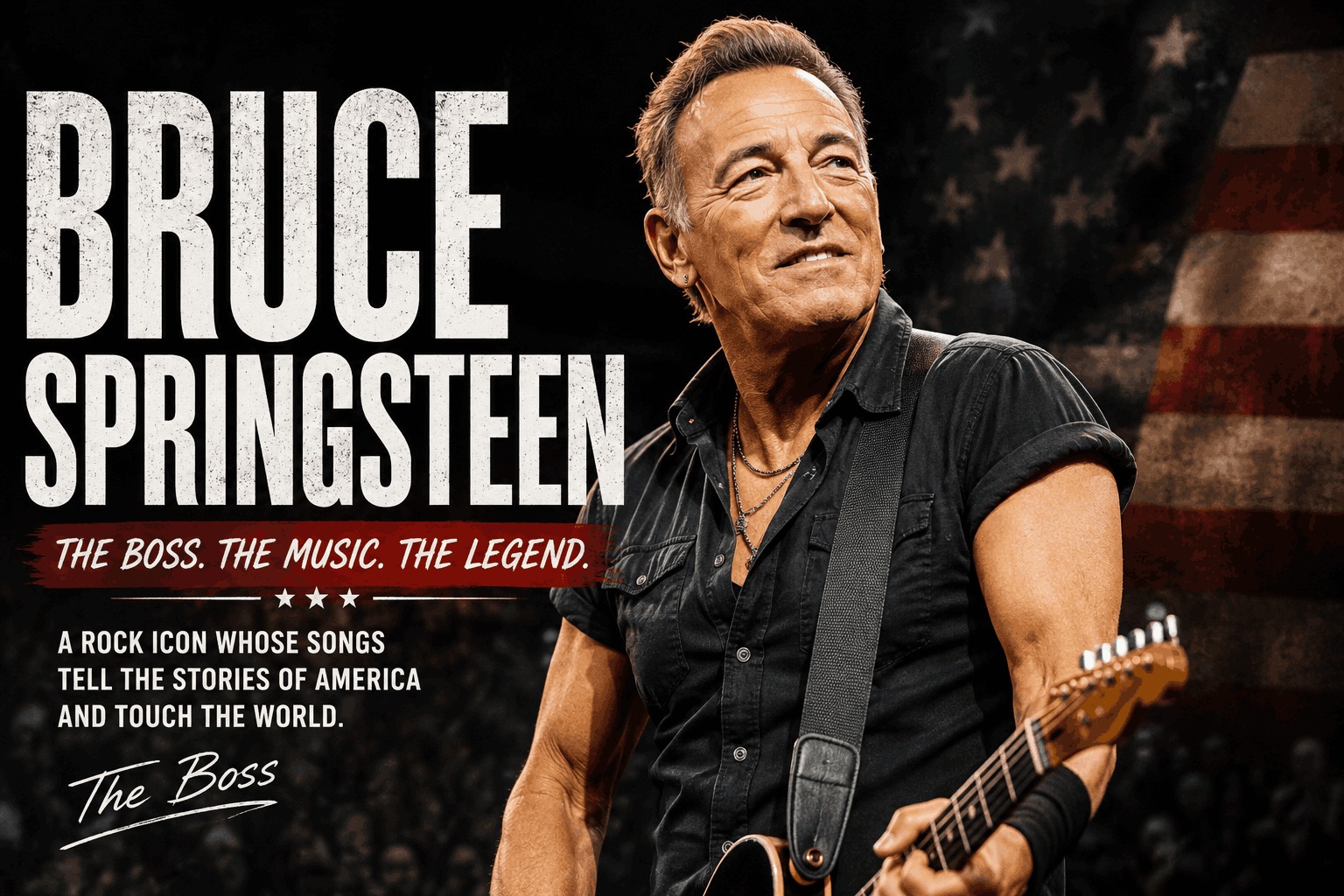
Bruce Springsteen is a defining voice of the American experience. For over five decades, the man known as The Boss has chronicled the struggles and triumphs of working-class life with unparalleled honesty and passion. From the Jersey Shore to stadiums worldwide, his legendary concerts and poetic lyrics have created a community of devoted fans . This guide explores how Springsteen built a career of substance, artistry, and lasting cultural authority.
The Early Life That Shaped The Boss
Bruce Frederick Joseph Springsteen was born on September 23, 1949, in Long Branch, New Jersey . His working-class upbringing in Freehold Borough profoundly shaped his worldview and artistic voice. His mother, Adele, worked as a legal secretary and was the family’s primary breadwinner, while his father, Douglas, struggled with mental health issues and worked a series of jobs .
This environment of financial strain and emotional complexity provided the raw material for his later songs. Growing up Catholic, Springsteen was influenced by its rituals and ethos, an influence he has acknowledged as central to his music . The critical moment came at age seven when he saw Elvis Presley on The Ed Sullivan Show and knew music was his path .
A Guitar, A Dream, And The First Bands
At age 13, Springsteen’s mother rented him a guitar from Mike Diehl’s Music in Freehold for six dollars a week . He later bought his first guitar for $18.95 from Western Auto, inspired by the Beatles’ appearance on The Ed Sullivan Show . These early instruments were the catalyst for a musical journey that would become legendary.
Springsteen honed his craft in local bands throughout the 1960s. He played with the Castiles, who recorded original songs, and later performed with Earth, a power trio. From 1969 to 1971, he played with Steel Mill, a band that gained a cult following. During this period, he performed at various venues, eventually building a reputation on the Jersey Shore . His relentless gigging forged his stage presence.
The E Street Band: A Musical Brotherhood
Bruce Springsteen’s career is inextricably linked to the E Street Band, his backing band since 1972 . This group, including icons like the late Clarence Clemons and Steven Van Zandt, became a musical brotherhood. They were not just hired hands but co-creators of the legendary “Wall of Sound.”
The band’s chemistry was key to Springsteen’s ability to create transcendent live shows. Their camaraderie and musical interplay provided the foundation for epic, four-hour concerts. Even during periods when Springsteen worked with session musicians, the pull of the E Street Band was undeniable. The 1999 reunion tour was a historic event, reinforcing the centrality of this entity to his legacy .
‘Born to Run’: The Breakthrough Album
Springsteen’s first two albums received critical acclaim but lacked commercial success. Producer Jon Landau’s famous declaration—”I saw rock and roll future, and its name is Bruce Springsteen”—helped build anticipation for the 1975 album Born to Run .
The album was Springsteen’s “make or break” moment. The title track became an anthem of youthful longing and escape. The album was a massive commercial and critical success, landing Springsteen on the covers of Time and Newsweek simultaneously . Born to Run established Springsteen as a major artist and a unique voice in American rock music, setting the stage for everything that followed.
‘Darkness on the Edge of Town’ and ‘The River’: Maturity and Depth
Following the success of Born to Run, Springsteen faced a legal battle that prevented him from releasing new music for years. When he returned with Darkness on the Edge of Town in 1978, it was a different record. It traded youthful romanticism for a stark, powerful portrayal of adult desperation and resilience .
He followed this with the ambitious double album The River (1980), which showcased Springsteen’s range. It mixed party rockers like “Hungry Heart” with tragic tales of working-class life . This album demonstrated his ability to balance commercial appeal with profound artistic depth, cementing his reputation as a major cultural figure.
‘Nebraska’: A Solo Masterpiece
In 1982, Bruce Springsteen released Nebraska, a solo acoustic album recorded on a four-track cassette. This stark, haunting album represented a complete departure from the stadium-ready sound of its predecessor .
Nebraska is a collection of bleak, minimalist folk songs about outcasts, criminals, and the desperate edge of American life . The album was a commercial risk that paid off artistically. It showed the world a new side of The Boss—an intimate, uncompromising storyteller. Its influence can be heard in the work of artists like Bon Iver and The National.
‘Born in the U.S.A.’ and Global Superstardom
The release of Born in the U.S.A. in 1984 transformed Bruce Springsteen from a beloved rock icon into a global superstar . The album was a phenomenon, spawning seven Top 10 singles, including “Dancing in the Dark,” and a massive, record-breaking world tour .
Despite its anthemic, synth-laden sound, the title track was a complex and often-misunderstood critique of the treatment of Vietnam veterans . The album’s immense success made Springsteen a household name. However, he was frequently appropriated by political figures who misunderstood his message, something he consistently resisted.
Reinvention in the 1990s: Tunnel of Love and Solo Work
After the massive success of Born in the U.S.A., Springsteen took a sharp turn. He released Tunnel of Love in 1987, an introspective exploration of love, marriage, and commitment . He then disbanded the E Street Band and released Human Touch and Lucky Town simultaneously in 1992.
In 1995, he released The Ghost of Tom Joad, another stark, acoustic album inspired by the Dust Bowl ballads of Woody Guthrie . This period demonstrated his commitment to artistic growth. He refused to be pigeonholed as a stadium rocker, choosing instead to follow his creative instincts wherever they led.
The Rising and a Return to Relevance
Bruce Springsteen reunited the E Street Band in 1999 for a successful tour. The subsequent album, The Rising (2002), was a powerful and emotional response to the September 11 attacks . It was a massive critical and commercial success, reaffirming his status as a vital and relevant artist in the 21st century.
The album dealt with themes of loss, grief, and hope in the aftermath of tragedy. It connected with the public on a deep, emotional level. The Rising showed that Springsteen’s ability to speak to the nation’s soul was undiminished.
The 21st Century: A Prolific and Honored Icon
The new millennium saw Bruce Springsteen continue a prolific streak. He released a series of acclaimed albums, from the folk-influenced Devils & Dust to the Irish-American standards of We Shall Overcome: The Seeger Sessions . He addressed contemporary issues with Wrecking Ball.
He also expanded his creative portfolio, publishing his autobiography Born to Run in 2016, which became a New York Times bestseller . The accompanying one-man show, Springsteen on Broadway, was a massive hit and showcased his storytelling talents. He has received virtually every honor imaginable, including the Presidential Medal of Freedom .
Awards and Legacy
Bruce Springsteen is one of the most decorated artists in music history. He has won 20 Grammy Awards, an Academy Award, two Golden Globes, and a Special Tony Award . He was inducted into both the Rock and Roll Hall of Fame and the Songwriters Hall of Fame in 1999 .
Rolling Stone has ranked him 23rd on its list of the “100 Greatest Artists of All Time,” describing him as “the embodiment of rock and roll” . His record sales exceed 140 million worldwide . However, his true legacy lies in his songs, which have become a part of the American cultural fabric.
Why The Boss Remains the Ultimate American Icon
Bruce Springsteen’s enduring appeal goes beyond record sales and awards. He represents a certain ideal of American authenticity, grit, and perseverance. His songs about working-class struggles resonate because they are rooted in his own experience. He has consistently used his platform to speak for the marginalized and to hold a mirror up to his country.
He is a figure of unwavering integrity. His career is a testament to the power of hard work and a refusal to compromise artistic vision. As a performer, he is unmatched in his ability to create community and catharsis.
Frequently Asked Questions About Bruce Springsteen
What is Bruce Springsteen’s real nickname?
Bruce Springsteen’s most famous nickname is “The Boss.” He earned it early in his career when he was responsible for collecting the nightly pay and distributing it to his bandmates. While he initially disliked the nickname, he has since embraced it .
Which albums made Bruce Springsteen a superstar?
Springsteen’s breakthrough came with Born to Run in 1975, which brought him critical and commercial success. However, it was the 1984 album Born in the U.S.A. that catapulted him to global superstardom, becoming one of the best-selling albums of all time .
Who are the E Street Band?
The E Street Band is Bruce Springsteen’s legendary backing band since 1972. Key members have included the late saxophonist Clarence Clemons, guitarist Steven Van Zandt, guitarist Nils Lofgren, bassist Garry Tallent, pianist Roy Bittan, and drummer Max Weinberg, among others .
Why is Bruce Springsteen so important to American culture?
Bruce Springsteen is vital because his music chronicles the American experience. His working-class background gives his lyrics authenticity. He is a masterful songwriter who tells stories of the common person, making him a cultural historian and a voice for the voiceless.
Where can I see Bruce Springsteen’s latest tour dates and projects?
For the most current information, you should visit Bruce Springsteen’s official website. He continues to tour and release new music, with recent albums like Letter to You and Only the Strong Survive showing his ongoing creativity .
Conclusion: Celebrate the Legacy of The Boss
Bruce Springsteen is more than a musician; he is an institution. His journey from the boardwalks of Asbury Park to becoming a global icon is a story of immense talent, relentless work, and unwavering integrity. He has created a body of work that is a cornerstone of American culture.
His legacy is alive in his music and his incredible live shows. If you have never seen him perform, it is a powerful and transformative experience. Continue to listen to his music and support new artists who carry on the tradition of authentic, soulful storytelling.